
In Dubai, the number of employee visas a company can issue is tied to the size of its registered office. The working rule is roughly 9 m² (about 97 sq ft) of Ejari-registered space per visa. A flexi desk or virtual office does not satisfy the mainland requirement and typically caps you at zero to two visas in a free zone.
- Mainland: ~9 m² per visa, physical office, Ejari mandatory.
- Free zone flexi desk: usually 0–2 visas, no Ejari-style lease needed.
- Ejari registration fee: AED 100 + AED 10 knowledge + AED 10 innovation + AED 55 service partner + VAT.
- Dubai office rent: AED 100–180 per sq ft in mid-tier districts, above AED 300 in prime towers.
- Per-visa cost: roughly AED 3,000–7,000 on top of the space.
What the visa quota actually is
The visa quota is the maximum number of residence visas a UAE company may sponsor, calculated primarily from the floor area of its registered office. It is not a negotiable allowance and it is not tied to turnover, capital or headcount ambitions. It is tied to square metres on a registered lease.
This catches most founders by surprise. You can have the licence, the capital and five signed employment offers, and still be unable to issue a fifth visa because your office is 36 m² instead of 45 m². The licence authorises the activity; the office determines how many people you may bring in to do it.
Your trade licence decides what you may do. Your office decides how many people you may do it with.
Two further points matter in practice. Authorities may carry out physical inspections to confirm the space genuinely holds the desks and facilities for the number of visas allocated. And the quota is reassessed when you renew or relocate — an office that worked for four people does not silently stretch to seven.
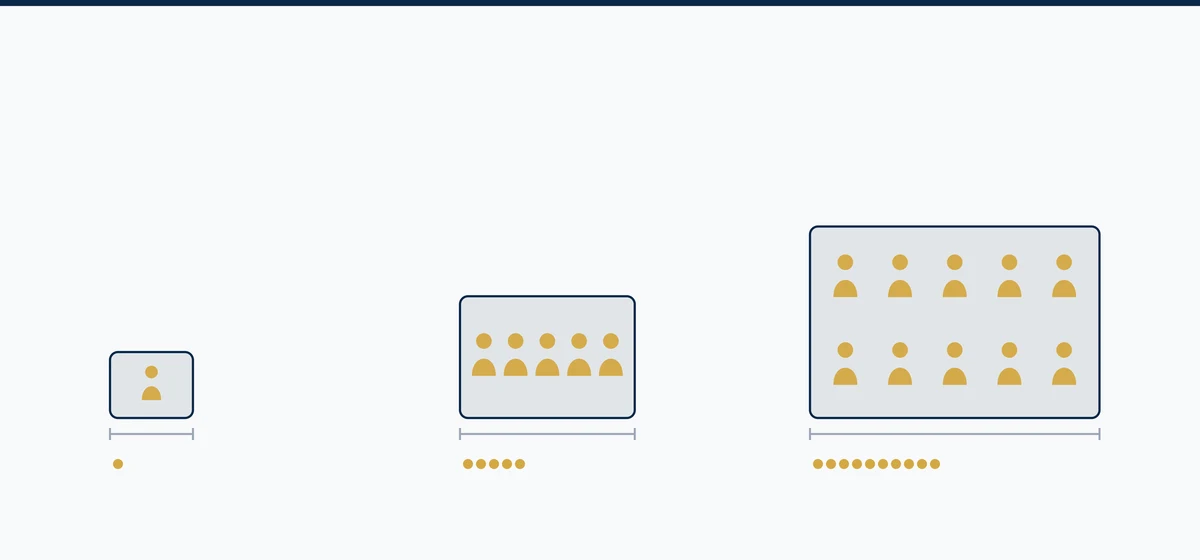
The 9 m² rule: how many visas your office allows
On the Dubai mainland, authorities allocate approximately one employee visa per 9 to 10 square metres of Ejari-registered office space. In imperial terms that is commonly cited as 80 to 100 sq ft per visa. The exact figure varies slightly by authority and activity, but the planning assumption is stable.
Run the arithmetic before you sign anything:
| Visas needed | Minimum area | In sq ft | Indicative Dubai rent per year |
|---|---|---|---|
| 1 | 9 m² | ~97 | AED 9,700 – 17,500 |
| 3 | 27 m² | ~291 | AED 29,100 – 52,400 |
| 5 | 45 m² | ~484 | AED 48,400 – 87,100 |
| 10 | 90 m² | ~969 | AED 96,900 – 174,400 |
| 20 | 180 m² | ~1,938 | AED 193,800 – 348,800 |
The rent column uses AED 100–180 per sq ft, the range commonly quoted for established mid-tier and emerging Dubai districts. Prime Grade A space in Downtown Dubai can exceed AED 300 per sq ft, which roughly doubles every figure in that column.
The mainland minimum office size is generally cited at 200 sq ft — so even a one-visa company cannot simply rent 97 sq ft. Plan the floor, then the visas.
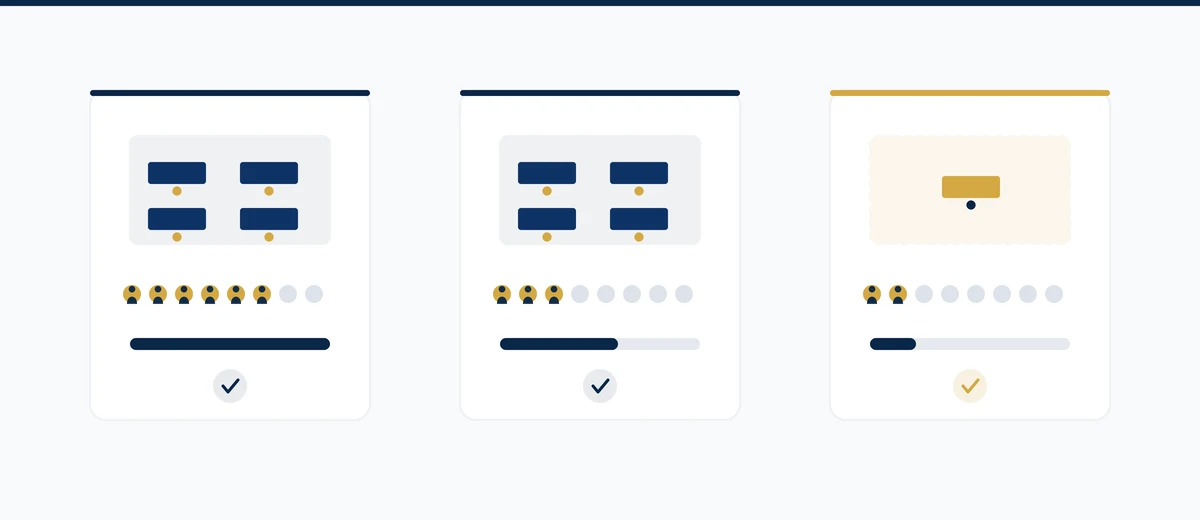
Mainland, free zone or flexi desk
The rule that ties visas to floor area applies most strictly to mainland companies; free zones apply their own package-based caps. Choosing between them is therefore not only a question of ownership or market access, but of how many people you intend to sponsor.
Mainland
A Dubai mainland company must lease physical commercial premises and register the lease through Ejari under the Dubai Land Department. The quota follows the area. A virtual address is not accepted. This route gives the highest ceiling and the highest cost.
Free zone with a dedicated office
Free zones set quotas per package rather than purely by area, but the logic is similar: more space, more visas. Registration happens with the free zone authority instead of Ejari, which removes one administrative layer.
Flexi desk and virtual office
A flexi desk is a shared workstation with a registered business address, typically bundled with a licence. It usually carries a quota of zero to two visas. A virtual office provides an address and mail handling with no workstation at all and generally carries no visa entitlement.
The distinction between those two is the single most common point of confusion, and it is covered in more detail in the office types overview.
Ejari: the gate you cannot skip
Ejari is the mandatory tenancy contract registration system operated by the Dubai Land Department; without a registered contract, a mainland lease has no standing for visa or licensing purposes. It is the document that converts a rental agreement into something an authority will act on.
The official fee structure, published by the Dubai Land Department, is precise: AED 100 to register the tenancy contract, plus AED 10 knowledge fee, AED 10 innovation fee, an AED 55 service partner fee and AED 2.75 VAT on that partner fee. Registration is possible at a Real Estate Trustee Centre or online through the Ejari system or the Dubai REST app.
Note what this means for planning: the Ejari fee itself is trivial. The cost is the lease behind it. Founders who budget for "Ejari" as a line item and not for the floor area it registers are budgeting for the wrong thing.
What a Dubai office actually costs in 2026
Total first-year cost for a small Dubai setup — licence, rent and initial permits — commonly lands between AED 40,000 and AED 80,000. The office is usually the largest single component, and visas are charged on top.
- Office rent: AED 100–180 per sq ft in mid-tier districts; above AED 300 per sq ft in prime towers.
- Small office in a popular area: roughly AED 35,000–60,000 per year for Business Bay or comparable.
- Each visa: approximately AED 3,000–7,000 including entry permit, medical, Emirates ID and stamping.
- Ejari: AED 177.75 all in, per the official schedule above.
The figures that surprise people are the second-order ones: security deposits, agency commission, DEWA connection, fit-out and service charges. None of them appear in the headline rent, and together they routinely add a further 15–25 per cent in year one.
From lease to visa, step by step
The order matters. Doing these out of sequence is the most common cause of delay.
- Decide the visa count first. Not the office. The number of people you intend to sponsor in the next twelve months sets the minimum area.
- Convert to area. Multiply by 9 m² and check the result against the mainland minimum office size.
- Choose jurisdiction. Mainland for local market access and higher ceilings; free zone for lower cost and simpler administration.
- Sign the lease with the area confirmed in writing, not estimated from a floor plan.
- Register Ejari — online or at a Trustee Centre. Keep the certificate; every later step asks for it.
- Apply for the establishment card, then the visa quota approval, then individual visas.
- Prepare for inspection. Desks and facilities should genuinely match the number of visas requested.
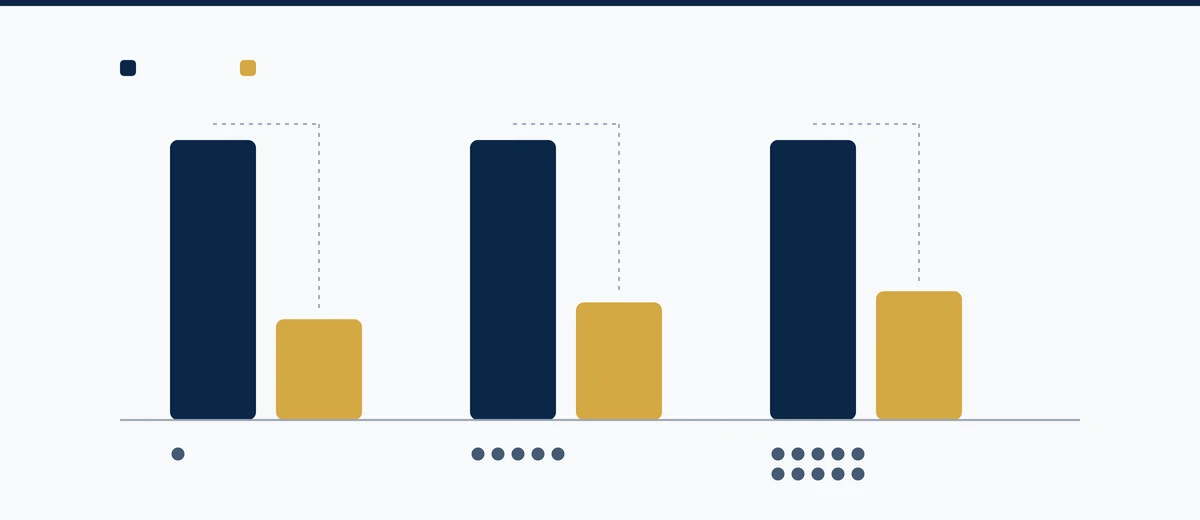
Where Ras Al Khaimah changes the arithmetic
Ras Al Khaimah applies the same federal visa framework as Dubai but at materially lower space and licensing costs, which changes what a given quota costs rather than what it permits. A UAE residence visa issued through RAK carries the same status as one issued through Dubai.
The practical differences:
- Flexi desk entry point: RAKEZ publishes four coworking tiers with eligibility for one, up to two and up to four residence visas, but no prices; providers quote roughly AED 5,500–11,000 a year without a visa. Two visas is already the count that would require a leased office on the Dubai mainland.
- Per-visa processing: corporate service providers quote roughly AED 3,500–5,000 per person covering entry permit, medical, Emirates ID and residency stamping. RAKEZ publishes no rate of its own.
- Office rent: RAK office rents commonly run 40–60 per cent below comparable Dubai space.
- Distance: about 45 minutes from Dubai, with direct access to RAK International Airport and the highway network.
This is not an argument that Dubai is the wrong choice. If your clients, your licence category or your investors require a Dubai address, the premium buys something real. It is an argument for pricing the alternative before committing — particularly for companies whose work is delivered remotely or regionally rather than from a Dubai street address.
You can see current RAK options and indicative pricing in the pricing overview, and the zone-by-zone breakdown under locations.
Common mistakes
Renting the office before counting the visas. The most expensive sequence error. The visa count sets the area, not the other way round.
Assuming a flexi desk covers mainland visas. It does not. A flexi desk or virtual office generally fails the mainland office requirement outright.
Budgeting headline rent only. Deposits, commission, DEWA, fit-out and service charges routinely add 15–25 per cent in the first year.
Treating the quota as permanent. It is reassessed on renewal and on relocation. Growing headcount without growing floor area stalls at renewal.
Skipping the inspection question. A registered area that is not physically fitted out for the requested visa count can be challenged.
Frequently asked questions
How much office space do I need per visa in Dubai?
Approximately 9 to 10 square metres, or 80 to 100 sq ft, of Ejari-registered office space per employee visa on the Dubai mainland. A 45 m² office therefore supports around five visas. The mainland minimum office size is generally cited at 200 sq ft regardless of visa count.
Can I get employee visas with a flexi desk in Dubai?
In a free zone, usually up to two. For a mainland company, no — a flexi desk or virtual office does not satisfy the physical office requirement for mainland work permits and residence visas. If you need more than two visas, you need leased space.
What is Ejari and do I really need it?
Ejari is the Dubai Land Department's mandatory tenancy contract registration system. For a mainland company it is not optional: the registered contract underpins licence renewals, visa applications and bank compliance. Official fees are AED 100 plus AED 10 knowledge, AED 10 innovation, AED 55 service partner and VAT.
What does a Dubai office cost per year?
Mid-tier and emerging districts commonly quote AED 100–180 per sq ft per year; prime Grade A space in Downtown Dubai can exceed AED 300 per sq ft. A small office in a popular area such as Business Bay typically runs AED 35,000–60,000 annually before deposits and service charges.
How much does each visa cost on top of the office?
Roughly AED 3,000 to 7,000 per investor or employee visa, covering the entry permit, medical testing, Emirates ID and residency stamping. This is separate from the office cost and from the trade licence.
Is a Ras Al Khaimah visa the same as a Dubai visa?
Yes. Both are UAE residence visas issued under the same federal framework and carry the same status for banking, schooling and travel. What differs is the cost of the office and licence behind them, not the visa itself.
How many visas does a RAKEZ flexi desk include?
RAKEZ publishes four coworking packages with eligibility for one, up to two and up to four residence visas, and publishes no prices for them. Corporate service providers quote roughly AED 5,500–11,000 a year for a licence and desk without a visa, and roughly AED 3,500–5,000 per visa processed — generally below comparable Dubai free zone rates, though these are provider quotes rather than RAKEZ figures.
Does the authority actually inspect the office?
It can. Inspections check that the registered space genuinely contains the desks and facilities appropriate to the number of visas allocated. A registered area used only as an address, with no fit-out, is the case most likely to be challenged.
What happens to my quota when I renew or move?
It is reassessed. A quota granted against one lease does not automatically transfer to a smaller space, and headcount growth without additional floor area typically stalls at the next renewal. Plan area for the team you expect, not the team you have.
Work out your quota before you sign a lease
Tell us how many visas you need and we will show you what that floor area costs in Ras Al Khaimah — including flexi desk, serviced office and Ejari-ready options.
Get your options on WhatsApp